We moved to Vietnam in the strictest year of its lockdown: 28-day quarantines in Hanoi, soldiers at the checkpoints, and a little girl across the hall who turned my rubber ducks into a daily adventure.
Nancy Carleton and her husband Jay moved to Vietnam in 2021, during the country's strictest Covid lockdown. Entry meant 28-day quarantines in Hanoi, which they did more than once, while soldiers enforced a stay-at-home order in Ho Chi Minh City from August 23 until October 1, 2021. Once the city reopened, a tour led them to a men-only Saigon bird café, where caged songbirds are hung facing one another because territorial males sing louder and better when they hear a rival. Reported first-hand for That Layover Life.
The first time I walked anywhere in my new city, I was carrying medical paperwork so the soldiers across the street would let me pass.
A walk to the clinic
Jay and I arrived in the Asia Pacific under some of the most challenging circumstances you could design. Covid restrictions. A closed border, and months of separation from each other. Military-enforced isolations. Food shortages. Language barriers. Oh my.
Getting into the country meant quarantine, and quarantine meant Hanoi: I was required to do mine there, in a hotel room, before I could go home to Ho Chi Minh City. The rule at the time was twenty-eight days. Before Vietnam was finished with us, we did twenty-eight-day quarantines more than once.
The round I am telling you about began in July 2021. It ran twenty-eight days, and for fourteen of them I was lucky enough to have my husband. To finish it, I needed a PCR test, which is how I came to take my first walk in my new home: two kilometers, in brilliant sunlight, to the Family Medical center.
The country was in a strict lockdown. The military had set up shop across the street, and shopping was allowed in a two-hour window, once a week, at a set time. I was noticed. But I was clutching my medical paperwork, and that showed I had a reason to be on the road.
I checked in and sat down to wait. Then chaos erupted at the tropical outdoor clinic. A young man in his twenties, who had walked in behind me, was having a heart attack. I held the door open for nurses running for supplies, and I heard a doctor ask where the nearest hospital was as they started chest compressions.
There were no ambulance sirens. There couldn't be. The hospitals were at capacity, and taxis had been turned into makeshift emergency vehicles. (That is not a figure of speech. In late July 2021 the city began refitting taxis with oxygen tanks and ventilator masks, with a medical worker riding along, because the ambulances could not keep up.)
The picture was frightening and hopeful at once: a community doing everything within its power, as a team, to save one young man's life. I will never know what happened to him. I hope he is OK.
Cardboard beds and duck hats
The lockdown kept tightening until even the once-a-week shopping window disappeared. In August, soldiers were deployed on the streets of Ho Chi Minh City to enforce a stay-at-home order so strict that residents could not leave even to buy food; the army staffed the checkpoints and delivered the groceries. Hard for me, someone who had spent the better half of a year in personal isolation. Much harder for others. The staff in our building were sleeping on cardboard beds in our parking garage. We overheard people talking about how they could not provide for their families, with more shortages of basic necessities looming.
And yet the most lasting memory of that time started on day one of quarantine in Hanoi, with a duck.
I had packed a suitcase of silly things to pass the time alone: a coloring book of the world from a dear friend, positivity quotes, and a small collection of rubber duckies for spa days. On the first night, opening my door to pick up my delivered dinner, I spied a young lady across the hallway doing the same. The next day, I saw her again. It was only on a video call with Jay that I realized my neighbor was the eight-year-old daughter of one of his new coworkers, in the same extended quarantine with her mom and her brother.
We shared an adjoining balcony that we were not supposed to spend time on, for distancing. So I thought, why not put the duckies outside, to give her some variety in what she saw each morning? Jay found her mom's contact, and I sent a quick text asking her to have her daughter peek outside for a welcoming of the Ninja Duckies.
It turned out she was traveling with her own little Gulliver, named Joya, and an enthusiastic note came back. Our correspondence began. Every morning, without ever speaking, we built a scene of ducks on an adventure. Our supplies were limited; our imaginations were not. She knit the ducks hats. She made them a plane. On my final day, a cup of coffee and a thank-you arrived at my door.
Life was not perfect then, and it was not easy for anyone. But people making a difference for each other turned out to be where the purpose, the hope and the adventure were hiding.
A first glimpse, courtesy of my sister
When Ho Chi Minh City reopened on October 1, 2021, the soldiers started taking down the barriers between districts. One year after deciding to move here, after months of rolling lockdowns and quarantines and more than a third of a year in hotel rooms, Jay and I finally went out to explore our new home. To say reopening Vietnam was wonderful is a serious understatement.
Our first real outing was a gift. My sister Jessica, from the other side of the world, booked us a tour of pagodas, landmarks, monasteries and markets. Thanks, Jazz. Our hearts were full again.
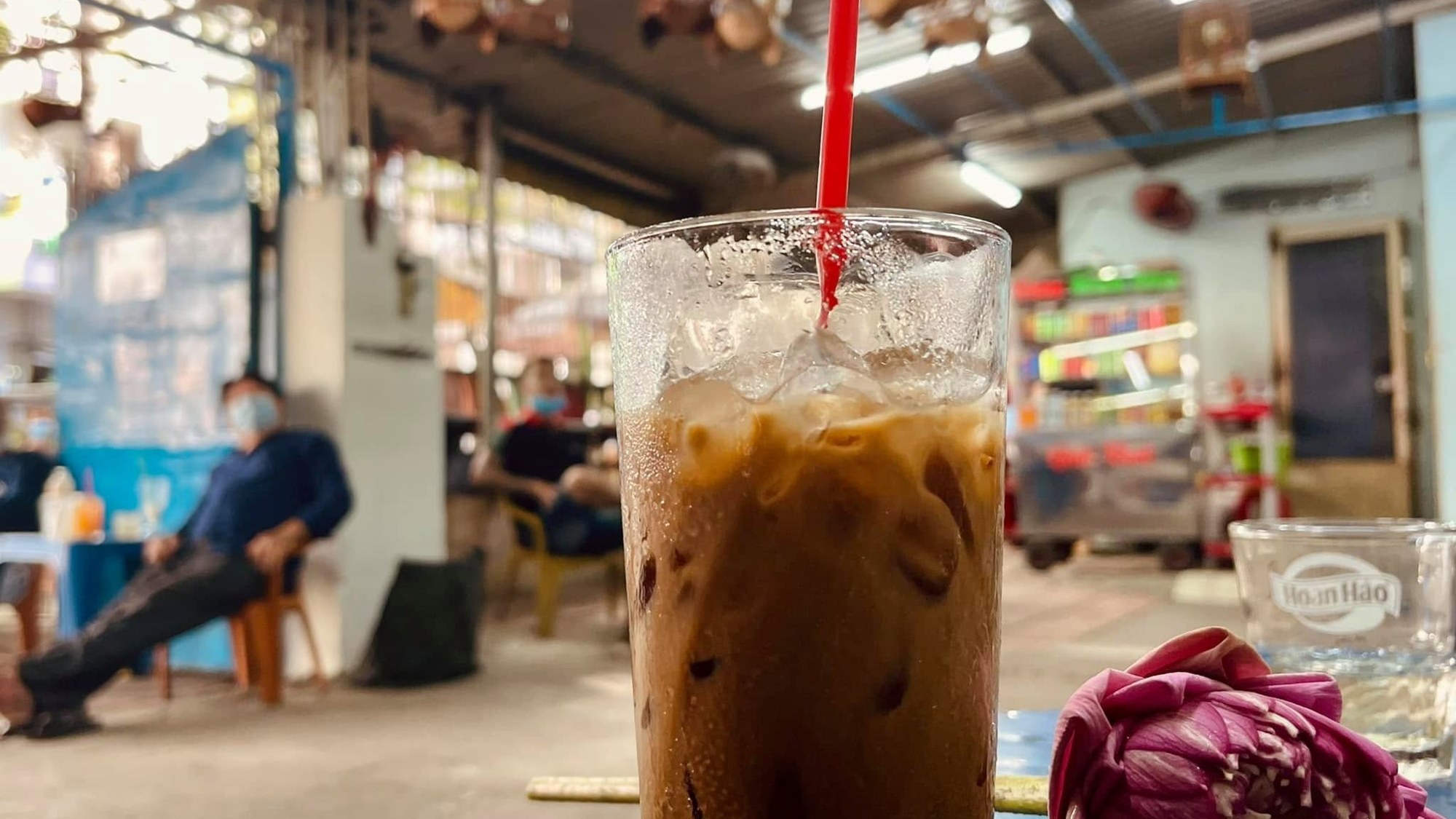
Two discoveries that day set the tone for the next year. The first was the iced coffee, which is sooooo good. The second was a men-only bird café, where, as far as anyone could tell, we were the first tourists back in two years.
Why the cages face each other
A Saigon bird café is exactly what it sounds like and also nothing like what you would expect. Men arrive early, some on motorbikes, carrying birds in covered cages. The cages go up on hooks. The covers come off. Then everyone drinks coffee and listens.
The tradition is old. Bird lovers in the city date it to 1954, and the best-known gathering, by Tao Dan Park in District 1, runs from about 6 a.m. until 8 or 9. The star of most mornings is the chào mào, the red-whiskered bulbul. The café is part social club and part training ground: the birds are rehearsing for singing competitions, where the cages are hung in a tight block so the birds have to face one another.
Here is why that works. For a songbird, song is not entertainment. It is a property line, sung out loud. A male sings to tell rival males the territory is taken, and when he hears a rival answer, he answers back. Ornithologists call this countersinging, and it can be measured. Nightingales hearing a recorded rival raised the volume of their songs by more than 5 decibels on average, far more than they did for other species' songs. Swamp sparrows sang with higher vocal performance when answering a playback rival than when they sang on their own.
So a row of men hanging cages within earshot of each other is not decoration. It is applied ornithology: every bird in the room thinks every other bird is a trespasser and answers by singing its best. One owner told a Saigon reporter that at home, alone with him, his bird sings only on instinct. At the café, it has someone to beat.
Worth knowing before you go: the chào mào in these cafés are mostly caught wild, and across Southeast Asia the songbird trade is a serious conservation problem, serious enough that researchers have a name for it, the Asian songbird crisis. I can still recommend the coffee. I would not recommend buying a bird.
If you go
- Bird cafés are a morning thing, roughly 6 to 9 a.m., busiest on weekends. Order a drink, which is the price of admission, and ask before you photograph anyone's bird. In Ho Chi Minh City, the long-running gathering by Tao Dan Park in District 1 is the one people mean.
- The iced coffee is cà phê sữa đá: strong coffee dripped through a small metal filter over sweetened condensed milk, then poured over ice. Order it everywhere. Compare notes.
- A first-day tour of pagodas, monasteries and markets is a good way into Ho Chi Minh City, especially if someone else books it for you. Thanks again, Jazz.
The hardest part about new beginnings
Who would have thought a two-year contract could fly by so fast, given how slowly the first months went?
Words still fail about how beautiful this part of the world is: the natural beauty, the empathetic people, the legendary cuisine. We arrived in the hardest version of it and left loving it anyway, which may be the best compliment I know how to give a place.
As all good things must, this one ended. Come November, we would be dancing the bachata and continuing to drink local café in São Paulo, Brazil, hoping our tan lines would hold and our Portuguese would improve. We embraced the change and welcomed new adventures. But the hardest part about new beginnings is saying goodbye.
Tạm biệt, Việt Nam. We love you, and you will always have a place in our hearts.
Felicidades,
Jay e Nancy
Our supplies were limited; our imaginations were not.
What is a bird café in Vietnam?
A café where bird keepers, mostly men, bring songbirds in covered cages early in the morning, hang them up, and drink coffee while the birds sing. In Ho Chi Minh City the best-known gathering is by Tao Dan Park in District 1, from about 6 to 9 a.m.
Why do bird café cages face each other?
Song is how male songbirds defend territory. A male who hears a rival sings back, often louder and with better performance, so keepers hang cages close together to push each bird to sing its best.
When did Ho Chi Minh City's Covid lockdown end?
The city's strict stay-at-home order, enforced by soldiers from August 23, 2021, was lifted on October 1, 2021.
What bird is a chào mào?
The red-whiskered bulbul, the most popular competition songbird at Saigon bird cafés.
Sources used in reporting this story:
- Vietnam deploys troops to enforce lockdown in largest city, Reuters via Malay Mail, on the August 2021 order
- Vietnam: militarized response must respect human rights, Amnesty International, on food shortages
- Vietnam commercial hub back in business after 3-month lockdown, AFP via The Vibes, on the October 1 reopening
- Ho Chi Minh City converts taxis into ambulances, Tuoi Tre News
- Saigon mornings are for the beautiful birds, Vietnam News Agency via DTiNews, on the Tao Dan bird café
- I Know Where the Caged Bird Sings, Saigoneer, on chào mào competitions
- Male-male vocal interactions and the adjustment of song amplitude in a territorial bird, Brumm and Todt, Animal Behaviour, 2004
- Song type matching and vocal performance in territorial signalling by male swamp sparrows, Liu, Soha and Nowicki, Animal Behaviour, 2018
- The lucrative bird-singing contests that are pushing species to the brink, Knowable Magazine via Popular Science, on the Asian songbird crisis
- Lessons learned across COVID-19 isolation in Vietnam, Nancy Carleton on LinkedIn, 2021
No links in this story are affiliate links.

Traveled with
Every story carries its receipts. Something out of date? Tell the editor and the "Last updated" line changes when we fix it.


Spot a fact that's off? A name we misspelled? Tell us. It gets fixed within 24 hours.
hello@thatlayover.life →