
I arrived in Marrakech, accidentally unsettled a fellow hiker at the airport, and a few days later had stood on the three highest peaks in the Atlas, fueled by baghrir, tuna sandwiches and sugar cubes meant for the mules.
Nancy Carleton trekked from Imlil in Morocco's High Atlas with Much Better Adventures, sleeping at the Toubkal refuge (3,207 m) and climbing Timzguida (4,089 m) and Ras Ouanoukrim (4,083 m), the twin summits of Ouanoukrim, then Jbel Toubkal (4,167 m), the highest peak in North Africa, on the following day. Those are the three highest peaks of the Atlas range. A licensed local guide has been mandatory in Toubkal National Park since the end of 2018. Geologists attribute the Atlas's height partly to a buoyant upwelling of hot mantle beneath unusually thin lithosphere, not crustal squeezing alone.
I had been on the ground in Marrakech for less than an hour before I made a grown man nervous at the airport.
Social skills: still in beta
His name was Jake, he was on the same trek, and I recognized him from his WhatsApp photo, which it turns out is something you are supposed to keep to yourself. (Social skills, still a work in progress.) We made our way together to a traditional riad tucked deep in the historic medina, where every corner looked like a scene from a film set.
Bags dropped, I went straight into the souks and squares under a relentless sun. I shopped for olive oil and spices, toured the palace and the riad gardens, and let the colors do whatever they were going to do to me. One gentleman asked me to dinner and offered me a ride on his motorcycle. I politely declined, but let's be honest: I did the happy dance, because this ol' gal has still got it.
The day's grand finale was a very American pilgrimage to Starbucks, because no matter where we go, we 'Muricans cannot resist the siren call of a familiar caffeine fix.
The elder stateswoman
Breakfast the next morning could have fueled an army: baghrir, the spongy Moroccan pancakes, endless varieties of bread, and, of course, tea. Sitting around the table with seven lads from the UK, it dawned on me that I was the vintage member of the group. With Ali, the next most numerically mature of us and still, technically, younger than me, at my side, I decided to embrace my role as the group's elder stateswoman.
We piled into a van and headed into the foothills of the Atlas, passing Richard Branson's hotel like it was no big deal, then fields of apples and apricots, then kids at the roadside selling the fruits of their labor. Our destination was Imlil, a lively town where we met our Amazigh guides, Ahmad and Lassan. Both had the calm confidence that makes you believe you can climb anything, which, it turned out, was a load-bearing quality.
Sugar cubes and a shriek in the dark
The trail wound up the Toubkal valley past picnicking villagers, kids playing soccer, and a line of pack mules who looked ready for their close-up and, in my case, for the sugar cubes lining my pockets. A creekside café gave us lunch and a burst of color and flavor, and before long we reached the mountain refuge.
The refuge is a rustic stone lodge at 3,207 meters, and about twenty of us bunked down in one shared room. The night's program included a great deal of snoring and, in one case, a shriek mid-sleep. Before lights out, we played a lively round of Cards Against Humanity, and I discovered that humor truly knows no borders.
Two summits and a tuna sandwich
The next day took us to Toubkal's sister peaks, Timzguida (4,089 meters) and Ras (4,083 meters), the twin summits of a mountain called Ouanoukrim. The route was billed as non-technical. In practice it had us scrambling over rocks and questioning our life choices. The reward was tuna sandwiches at the summit, with views that made every step worth it.
What nobody mentioned at breakfast was the ranking. Those two summits are the second- and third-highest points in the entire Atlas range. Toubkal, waiting for us the next morning, is the first. Without quite meaning to, we were collecting the set.
We celebrated our double-peak day back at the refuge with a heated game of Uno, where victory was as elusive as a good Wi-Fi signal or a hot shower.
Why the Atlas is taller than it should be
Here is the part I only learned once I was home and could feel my legs again: by the usual rules of mountain building, the High Atlas should not be this high.
Most great ranges are made by squeezing. Two pieces of crust push together, the rock crumples and stacks, and the thickened crust rides higher on the mantle, the way a thicker block of wood floats higher in water. The Atlas was squeezed too, as Africa pushed north over the last thirty-odd million years. But when geologists at the Autonomous University of Barcelona reconstructed cross sections of the central High Atlas, the squeeze turned out to be modest, shortening the range by a quarter at most. Stranger still, the shortening gets weaker toward the west, exactly where the mountains get taller.
The crust underneath cannot hold the peaks up on its own, either. Gravity modeling puts it at under 40 kilometers thick, without the deep root that a range of 4,000-meter summits would normally sit on. The answer the researchers landed on lies deeper. The plate's rigid lower layer, the lithosphere, is unusually thin beneath the Atlas, and hot, buoyant mantle has welled up in its place, lifting the whole region from below. The same upwelling explains the volcanic rock scattered across the region. Later seismic surveys found the slow, hot mantle the models predicted, and point to much of that lift happening in roughly the last five million years.
So the mountains I spent three days hauling myself up were, in part, being pushed up from underneath by heat. Hold that thought.
The crown jewel
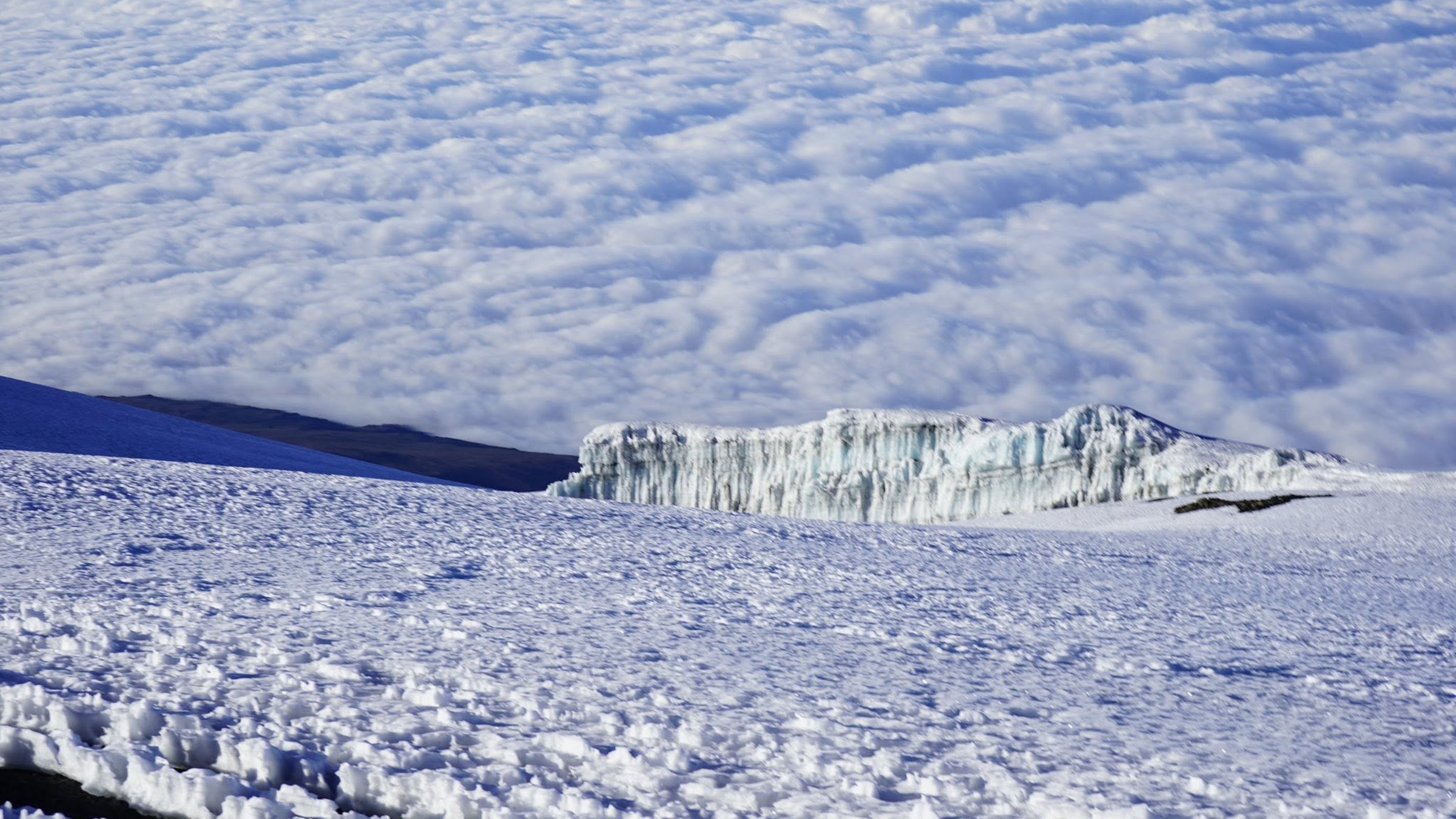
Toubkal, 4,167 meters, the highest mountain in North Africa. The alarms went off at 3 a.m., and we started climbing into the chilly void in the dark. As the sun rose, the Atlas was bathed in a golden glow, and reaching the summit felt like standing on top of the world.
The descent was a blur of adrenaline, rock-hopping, and high-fives with hikers from around the globe. The three highest summits in the Atlas, on back-to-back days. Fueled by that, I went back to Marrakech for one last spin through the spice markets before a Netflix binge lulled me into a well-earned sleep.
The numbers
- Total elevation gain: 4,670 meters
- Total distance hiked: 44 kilometers
- Peaks over 4,000 meters: 3
- Blisters: 4
- Uno victories: elusive
- Memories made: countless
If you go
- You need a licensed local guide. Since the end of 2018, every visitor to Toubkal National Park has had to hire one, and police checkpoints on the trail up from Imlil enforce it. The refuges will not take independent walkers. Imlil is where you meet your guide.
- The refuges sit at 3,207 meters. Expect a shared bunk room and the full acoustic range of twenty strangers asleep.
- Summit day starts in the dark. Ours began at 3 a.m. The sunrise is the reward.
- Look at the mules. Many of the mules in Imlil work in tourism, carrying trekkers' bags, and SPANA, the working-animal charity whose largest program is in Morocco, helped bring in local rules to protect them. Ill-fitting pack saddles cause painful wounds that its vets treat in the valley, so a well-fitted saddle is a good sign about an operator.
- The earthquake. The 8 September 2023 earthquake struck this part of the High Atlas hard, including the villages around Imlil and Asni. Ask your operator about current conditions on the trail and in the villages.
- Branson's place is Kasbah Tamadot, near Asni, about an hour's drive from Marrakech. Driving past it like it is no big deal is free.
What I'm taking home
I went to Morocco as the oldest person on the trip and came home having stood on the three highest points of an entire mountain range. The Atlas, it turns out, is taller than its paperwork says it should be, because something hot underneath keeps pushing it up. I know the feeling.
Morocco, Much Better Adventures, and crew: you were wild, wonderful, and just the right amount of weird. Until next time!
The Atlas is taller than its paperwork says it should be, because something hot underneath keeps pushing it up. I know the feeling. Without quite meaning to, we were collecting the set.
How high is Mount Toubkal?
4,167 meters, the highest peak in Morocco, the Atlas Mountains and North Africa.
Do you need a guide to climb Toubkal?
Yes. A licensed local guide has been mandatory since the end of 2018, checked at police posts on the trail from Imlil, and the refuges do not accept unguided walkers.
What are the three highest peaks in the Atlas?
Toubkal (4,167 m), then Timzguida (4,089 m) and Ras Ouanoukrim (4,083 m), the twin summits of Ouanoukrim, a short way from Toubkal.
Where do you sleep on a Toubkal trek?
At the refuges below the mountain, at about 3,207 meters, usually in shared bunk rooms.
Why are the Atlas Mountains so high?
Crustal squeezing only explains part of it. Studies of the High Atlas find modest shortening and thin crust, and attribute much of the elevation to hot, buoyant mantle rising beneath unusually thin lithosphere.
Operator on this trip: Much Better Adventures. Places named: Imlil, the Toubkal refuge, and Kasbah Tamadot near Asni. No links in this story are affiliate links.
Sources used in reporting this story:
- Teixell et al. (2003), Tectonic shortening and topography in the central High Atlas (Morocco), Tectonics
- Teixell et al. (2005), Effects of mantle upwelling in a compressional setting: the Atlas Mountains of Morocco, Terra Nova
- Teixell et al. (2007), Geodynamics of the High and Middle Atlas, Revista de la Sociedad Geológica de España
- Ayarza et al. (2014), High Atlas topography: from structural geology to seismic wave tomography, EGU
- Cicerone Press via UKHillwalking, Climbing Toubkal
- Morocco World News, Hiking Mt. Toubkal
- SummitPost, Ouanoukrim
- Virgin Limited Edition, Kasbah Tamadot
- SPANA, Helping working animals in Morocco
- SPANA, Morocco earthquake update

Traveled with
Every story carries its receipts. Something out of date? Tell the editor and the "Last updated" line changes when we fix it.

Spot a fact that's off? A name we misspelled? Tell us. It gets fixed within 24 hours.
hello@thatlayover.life →