
Ten strangers, a diverted flight, a ten-hour jeep ride and three lost days on the way to Everest Base Camp, plus how thin air actually works.
Nancy Carleton trekked to Everest Base Camp in Nepal in September 2022 with a group of ten booked through Much Better Adventures and run by Freedom Adventures. Bad weather diverted their flight from Lukla to Phaplu, costing three days and adding a ten-hour jeep ride, so the group skipped its acclimatization days at Namche Bazaar. The route reached Everest Base Camp at about 5,364 meters and Kala Patthar at about 5,644 meters. At Base Camp the air pressure is roughly half that at sea level, which is why the CDC advises raising sleeping altitude by no more than 500 meters a day above 3,000 meters. Reported first-hand for That Layover Life.
The first thing the plane said to us was "Danger, danger. Terrain. Pull up."
Three names for one mountain
In Tibet she is Chomolungma, usually translated as Goddess Mother of the World. In Nepal she is Sagarmatha, which the national park that bears her name translates as the forehead of the sky. Until 1865 the British survey called her Peak XV, and then the Royal Geographical Society named her after Sir George Everest, a former Surveyor General of India. Most of the world has called her Mount Everest ever since.
This is the story of how ten strangers spent twelve days walking through the Himalayas to Everest Base Camp, the roof of the world and very likely its most famous trek. Ours ran longer than most: about 103 miles (166 kilometers), topping out at 18,519 feet (5,644 meters). Two weeks off the grid, in nature, headed for the land of giants.
Kathmandu, at full volume
I landed in Kathmandu from Malaysia. My flight offered priority boarding for women, which in practice meant me and a sea of about a hundred men, each importing a television into Nepal.
Within a day I had been willingly tricked into a local art purchase, watched monkeys swim at Swayambhu Mahachaitya, and seen the Kumari, Kathmandu's living goddess, an eight-year-old girl (to some personal conflict). I also did my best to navigate the most chaotic traffic I have ever seen: rickshaws, dogs, people, mopeds and chickens, all with right of way.
We met our crew over two days in a comfortable hotel, over masala tea and friendly banter. A lovely dog-owning adventure couple from Devon. Three British mates from university. My new roommate, Diana, a charming Colombian. Me, the token American. And Sunil, our vibrant Nepali guide, full of anecdotes and riddles. (We had booked through Much Better Adventures; the trek on the ground was run by Freedom Adventures, Sunil's outfit.) To help you keep track: three of the seven of us trekkers were named Josh. The rest were a Chris, a Diana, a Helen and me.
The Devon couple came back from their day of touring with a story from the riverside temple, where they had been watching an outdoor cremation. The next body bag in line, they said, sat up, quite alive. Monty Python's "bring out your dead," in real life. You cannot make this stuff up.
Sunil opened with a safety briefing that was reasonably necessary and deeply unsettling: altitude sickness, injury on the trail, illness. In the Himalayan wilderness your emergency options are being carried down the mountain on a stretcher, riding a horse out, or a $2,500 helicopter. It did not help my nerves that earlier that day I had met a young woman who walked me through her helicopter rescue from her last attempt at this exact hike.
Then our first meal together, with local dances, a wine that reeked of tequila, and our introduction to dal bhat, the lentils and rice plate that fuels the entire country. The saying on the trail is "Dal Bhat Power, 24 Hour." It is not wrong.
Diana and I explored Kathmandu while Sunil checked everyone's gear, and she taught me the rhyme I still recite: "What to do, Kathmandu? What cat can do, man can't do. That's why we call it Kathmandu."
Danger, danger
The plan was to fly into Lukla, home of what is widely called the most dangerous airport in the world. The weather had a different plan.
We were redirected to Phaplu, in a plane that kept broadcasting "Danger, danger. Terrain. Pull up" over the speakers. From that remote town we summoned jeeps for a ten-hour excursion on the windiest, scariest mountain roads any of us had ever seen.
The new plan put us three days off course and added 45 kilometers to the trek, through muddy hills, with a side of mild whiplash. A jeep stalled on the mountain. The locals were not fazed. At one point the road had washed out at a waterfall. No problem: the drivers got out, rebuilt the road, and carried on to our lodge, which was a half-mile climb in the dark.
A sketchy start
Things were a little sketchy at first.
A cow kicked a member of our group on the trail. The girls nicknamed the first toilet, a hole in a dark cupboard, the Toilet of Doom. My headlamp switched itself on in my pocket and burned my leg into a proper scar. Another trekker woke in our pitch-black lodge to find a kitten in his bed. Someone else found a leech in their first bowl of lentil soup, while the rest of us were pulling leeches off our own skin.
This was looking to be a long two weeks.
Treks and treats
Once the first days burned off and the hiking found its rhythm, we got into the swing of things. Stops at tea houses meant lemon-ginger-honey tea, turmeric for ticklish throats, and momos.
To make up the lost days, we skipped our acclimatization days in Namche Bazaar and kept climbing. That was when Sunil started directing us to take altitude medicine and eat garlic soup daily. (More on that below.)
Trail breaks came with a long view of Ama Dablam, the most easily seen mountain in the region; suspension bridges unlike any you have ever crossed; prayer wheels, which Sunil called "money" wheels, to turn for good fortune as we passed through villages; and a constant yielding to cows, mules and yaks carrying goods up the mountain. We visited a monastery at dawn and ate breakfast on the patio with Everest in the distance.
Inside Sagarmatha National Park the views got even more epic. Wildlife and mountain landscape at every turn, and once, the rare sighting of the beast in the sky herself.
Diana took it upon herself to document the travels of a small toy llama, even as her boots were literally falling off her feet from the terrain.
Tiny village kids clapped their hands together and, in soft small voices, said "namaste" to every passing traveler. One, however, laughed with glee while shooting us with finger guns and then flipping us the bird.
We stayed keen on the hunt for the famous Yeti. It remained hidden.
Showers, phone charging and toilet paper became luxuries. You stop taking anything for granted once you realize every good up here made the same trek you did, likely on the back of a yak.
An evening when we locked ourselves out of a room ended in window climbs and all of us in stitches about what we would have done if we had not gotten back in.
To prepare for harder climbs, the team would head out on short acclimatization walks in each new place, then, tired from the day, sink into games of Heads Up or Uno in our jammies early in the evening. It is funny how much serious joy small treats can bring. The girls held popcorn movie nights (Everest, Legally Blonde 2 and Greenland). The boys were elated to find snooker in a mountain village. Candy was shared on the regular.
Who carries the mountain
We loved chatting with our front guides, Ganga and Ngima, two seriously ambitious young men, passionate about the mountain and their plans for the future.
The porters are worth a word, because people ask. Ours, our "Ironmen," were also young men, many of whom saw carrying the gear as a rite of passage and were eager for the tourist wages and opportunities the job offered. They were popular in every village, stronger than any tourist, and fun to chat with in the mornings.
Sunil made a point of checking in often, keeping his team connected to the guests, and handing out waivers for special help. On several occasions he handed me turmeric and cough syrup. Another new friend needed serious support for altitude headaches and loss of sight, which, thankfully, he overcame. Despite some real fears, Sunil and his team kept everyone laughing and healthy.
How thin air works (and why we kept walking up just to walk back down)
Here is the part the safety briefing does not quite explain. The air at Base Camp is still about 21 percent oxygen, the same as at the beach. What changes is the pressure. When the American Medical Research Expedition to Everest measured it in 1981, the air pressure at base camp averaged about 400 torr, against 760 at sea level. Every breath up there delivers a little over half the oxygen your body is used to.
The body adapts, but on its own schedule. The CDC puts the crucial first phase at three to five days, and the most important change is simply breathing more. More red blood cells come later. Altitude sickness strikes during that adjustment, not after it, which is why the rules are about pace rather than toughness. Once you are above 3,000 meters, the CDC's guidance is to raise your sleeping altitude by no more than 500 meters a day, and to add an extra day for every 1,000 meters you gain.
Note the word sleeping. Altitude illness tracks where you sleep more than where you walk, because a night spent high is when the body gets the least oxygen. Hence those afternoon acclimatization walks: climb high, come back down, sleep low.
Now remember the jeep. Losing three days meant losing the rest days at Namche Bazaar, the textbook acclimatization stop, and that is exactly when Sunil started handing out medicine. Ours turned out to be cold meds, and strong ones. The drug the CDC suggests for exactly that situation, a fast ascent that cannot be avoided, is something else: acetazolamide (Diamox). It blocks an enzyme called carbonic anhydrase, so the kidneys dump bicarbonate and the blood turns slightly acidic. The brain reads that as a cue to breathe harder, nudging the body along the acclimatization it was trying to do anyway. (Researchers say the full picture is messier than that tidy version, but that is the gist.)
The garlic soup, I cannot vouch for scientifically. Sunil prescribed it daily, and nobody argued.
EBC: 28°0′26″N 86°51′34″E
On a sunny Day 10, we made it to Everest Base Camp. Aaiyo kta keti: the boys and girls have arrived.
It was exhilarating to stand where some of the world's most elite athletes begin their climbs, and humbling to know how many lives the mountain has taken: more than 300 at the time. Our team was excited, proud and tired.
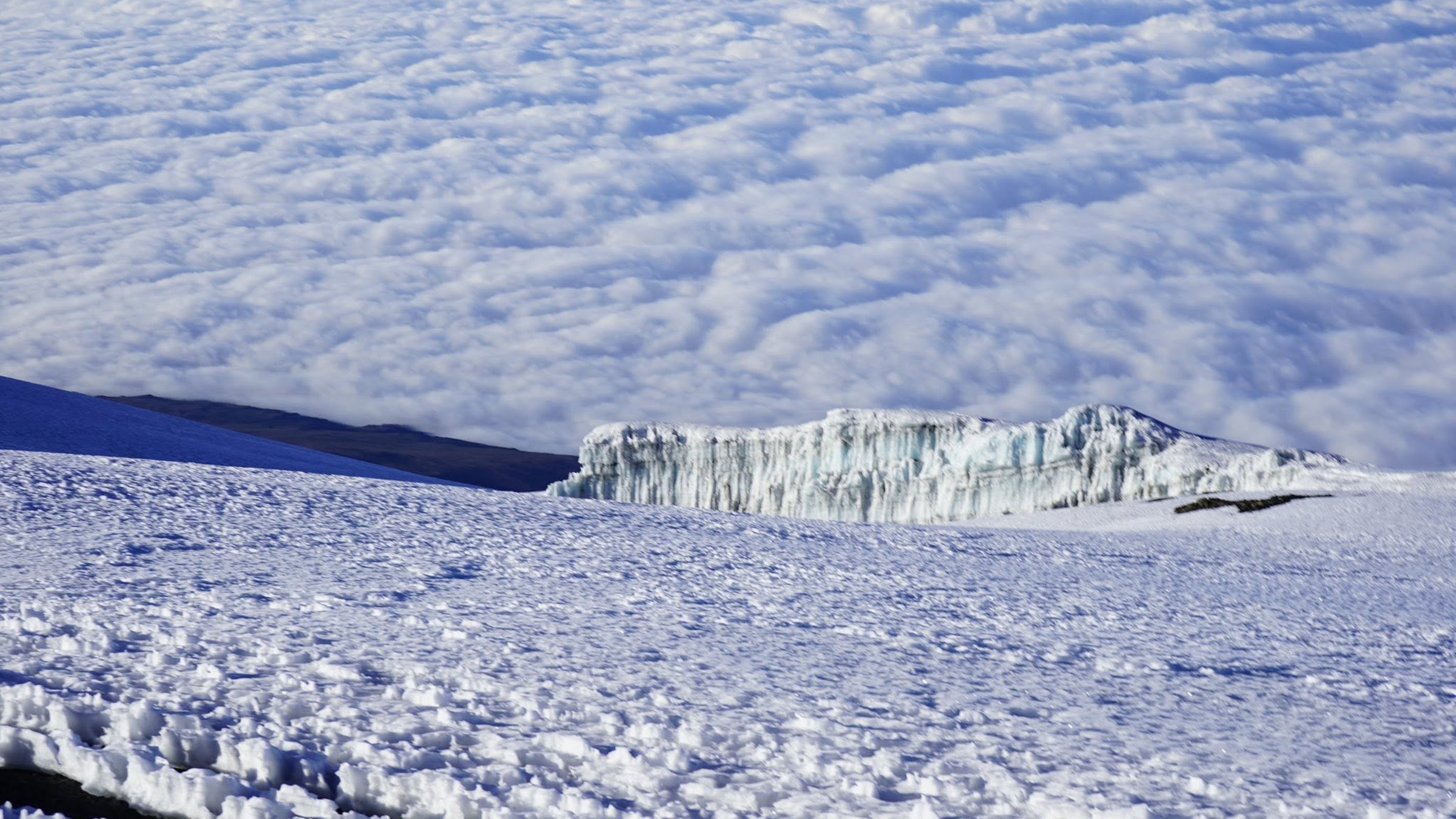
The next day we woke at 4:00 a.m., as so many do, for the final big climb, to Kala Patthar. The views we had been anticipating were hidden by fog, but a snowy finish to our highest point was its own reminder of what we were capable of.
Celebrate
Heading down the mountain, we earned nods of acknowledgment and glares of envy from the groups coming up. We had become the experts, handing out stories and advice.
A celebratory stop on our second-to-last day had one friend getting a tattoo at a shop billed as the highest in the world, followed by a night of dancing and snooker at the Irish Pub in Namche Bazaar, which claims the title of the world's highest Irish pub.
And then, on the final day, attempt two at Lukla. We waited out the fog for five hours, and then it was time to board.
Lukla's runway is 527 meters long and slopes uphill at an 11.7 percent gradient, with a mountainside at one end and a drop into the valley at the other. There is no going around for a second try. My nerves about rolling down that short runway and off the edge turned into pure excitement and adrenaline. As we boarded I could not stop smiling, and the pilots noticed. Halfway through the twenty-minute flight they invited me into the cockpit to chat about life, where we were from, and the flight plan. It was a pure joy.
If you go
- Build in buffer days. Lukla flights depend entirely on the weather, in both directions. We lost three days on the way in and spent five hours waiting on fog on the way out.
- Respect the sleeping-altitude rule. Above 3,000 meters, the CDC recommends raising your sleeping altitude by no more than 500 meters a day, with an extra day for every 1,000 meters. Skipping acclimatization days has a cost.
- Talk to a doctor about acetazolamide before you go, rather than improvising on the trail.
- What it costs. I paid £1,205.52 for the trek through Much Better Adventures in 2022 (run locally by Freedom Adventures). As of 2026 the same trek is listed from £1,278 per person for 15 nights, excluding international flights. That covers guides, porters, permits, lodging and the Lukla flights, but not meals on the trail, which the company puts at about $40 to $50 a day. Its current itinerary builds in two acclimatization days, at Namche and Dingboche. Budget a tip too; the company suggests around $150 per person for the crew.
- Check your insurance covers helicopter evacuation at altitude. We were quoted $2,500 for a ride out.
- Budget for the park. Sagarmatha National Park charges foreign visitors an entry fee (Rs 3,000 as of 2024; check the current rate).
- Kala Patthar is the high point, at 5,644 meters (18,519 feet), and the usual way to see Everest's summit up close. Go at dawn and hope the fog cooperates.
- Expect leeches on the lower trail, and a hole in a cupboard or two.
Land of giants
My clothes are ripe with the stench of yaks, sweat and grit. I miss my husband, my friends, Starbucks and my bed. But I leave Nepal proud, humbled and accomplished, one of the tens of thousands who walk this valley every year, with a trip stocked full of memories and new friends.
Base Camp is where the famous stories start. For us it was the turnaround point, and almost everything worth keeping happened on the way there and back.
Two weeks ago, I wanted to see Base Camp. I have gained so much more.
Every breath up there delivers a little over half the oxygen your body is used to.
How high is Everest Base Camp?
Everest Base Camp on the Nepal side sits at about 5,364 meters (17,598 feet).
How high is Kala Patthar?
Kala Patthar is about 5,644 meters (18,519 feet), higher than Base Camp, and is the usual viewpoint for seeing Everest's summit up close on the trek.
How fast should you gain altitude on the Everest Base Camp trek?
The CDC advises that once you are above 3,000 meters you raise your sleeping altitude by no more than 500 meters a day, and add an extra day for every 1,000 meters gained.
Why is Lukla airport considered so dangerous?
Tenzing-Hillary Airport at Lukla has a 527-meter runway on an 11.7 percent uphill gradient, with a mountainside at one end and a drop into the valley at the other, so there is no chance to go around.
What does Sagarmatha mean?
Sagarmatha is the Nepali name for Everest. Sagarmatha National Park translates it as "forehead of the sky." In Tibetan the mountain is Chomolungma.
Sources used in reporting this story:
- High-Altitude Travel and Altitude Illness, CDC Yellow Book
- Acute Altitude Illness: Wilderness Medical Society guidelines, American Family Physician, 2020
- Barometric pressures at extreme altitudes on Mt. Everest, West et al., Journal of Applied Physiology, 1983
- Mechanisms of action of acetazolamide in acute mountain sickness, Leaf and Goldfarb, Journal of Applied Physiology, 2007
- About Sagarmatha National Park, Government of Nepal
- Sagarmatha National Park, UNESCO World Heritage Centre
- Tourist arrivals in Everest region rebound, The Himalayan Times, 2023
- Around 9,000 trekkers visit Sagarmatha region in a month, The Himalayan Times, 2024
- 2022 Everest statistics, Alan Arnette, from Himalayan Database data
- Dangerous airport runways, Airport Technology
- Trek to Everest Base Camp, Much Better Adventures (operator page, for itinerary and price)
No links in this story are affiliate links.

Traveled with
Every story carries its receipts. Something out of date? Tell the editor and the "Last updated" line changes when we fix it.

Spot a fact that's off? A name we misspelled? Tell us. It gets fixed within 24 hours.
hello@thatlayover.life →